Published Articles

Mental Health – Shame

  “Shamed People Shame People”

A University lecturer once boldly announced that “we all have shame at our core”. Is this true or do some people have the capacity to be shameless? It is helpful to recognise that shame and trauma go hand in hand, however trauma is resolved on the basis of it being in the past, whereas shame is an on-going daily struggle in the present.

Shame exists within all of us as a shameful thought and a felt gut experience, a preference in the moment to be invisible or to be anyone else other than yourself. Shame makes us blush, feel guilty, embarrassed or humiliated. Our critical inner voice convinces us that we have behaved wrongly or foolishly and that we must hide or deny our wrong doings as we are not good enough and flawed. We surrender to shame as it erodes our courage, convinces us that we are unworthy and makes us fearful of being shunned and rejected by others.

Shame is an on-going daily struggle as connecting with people always presents the possibility of feeling ashamed. Within ourselves our “shame goblins” lie to us, they convince us that we are alone and that no-one else struggles in this way. Shame derives strength from driving the perceived shameful act into hiding making us feel isolated. Shame thrives in the dark, where it is a secret that remains hidden and heavy. However shame cannot survive in the light and exposure brings a sense of reality and changes shame to regret, freeing us to have self-compassionate and self-acceptance and a realistic perspective.

Shame resilience enables us to respond to the “shame goblins” in a different way by not obeying them.  It takes great courage and authenticity to accept that:

  • You can be vulnerable
  • You can take risks
  • You can be imperfect

Therapy provides a confidential setting to work with a professional to address shame that can consume us from within. It can be challenging for a client to work with shame and become the centre of attention, disclosing true feelings, daring to be seen. Developing self-compassion and empathy, the antidote to shame, can free us to be vulnerable, to authentically expose and explore shame within a safe therapeutic relationship.

Kerrie Hipgrave – Psychotherapist, Behaviouralist and Breathwork Coach


Mental Health – Emotions and the Breath

Breath is life!

We enter the world on the out breath and depart on the in breath. How we breathe influences our health, our quality of life and our life expectancy. It is astonishing that we are taught so little about breath, its significant impact on our health and the importance of breathing in the way our body is designed to do. There is little information or encouragement to visit a Breathwork Coach, nor is this service offered at most GP practices. Headaches, shoulder aches, neck ache, migraine, lower back ache and digestive problems are just some of the ways dysfunctional breath can have a daily physical negative impact.

You may be wondering what breathing has to do with mental health. Through my therapeutic work I became increasingly aware how clients’ mental and emotional states directly impacted their breathing. I wanted to offer breathwork to support my clients through psycho-education and breathwork techniques to have a direct positive impact on emotional, physical and mental wellbeing. Having studied and qualified as a Breathwork Coach, I have now successfully incorporated this into my practice to benefit all clients who wish to participate.

Our natural breath, the optimal breath, is to breathe in and out through the nose with the mouth closed.  The heart beats faster when you breathe in than when you breathe out.  Breathing into the chest and lower abdomen engages the diaphragm (large circular plate of muscle beneath the ribs) and uses the correct breathing muscles to lift and lower the rib cage. Breathwork and our natural breath promotes resilience and tolerance of difficult feelings and helps us to feel calm and energised with a longer life expectancy.

Breath is the only means we have of taking control and consciously overriding our Autonomic Nervous System and triggered uncomfortable emotional states. Through conscious breath we can transition out of hyperarousal or hypoarousal into the Window of Tolerance where we feel safe, calm and relaxed.

THE WINDOW OF TOLERANCE, HYPERAROUSAL AND HYPOAROUSAL

Window of Tolerance, yellow zone, is when we feel safe, relaxed and calm.  We can reason and feel emotionally balanced, our breath is even and calm. We are in rest and digest.

Hyperarousal: he fear of potential threat triggers us into this state where we feel anxious and panic.  Physically we are in the fear response of fight or flight.  We experience unclear, irrational thoughts leading to emotional distress.  Our breath is rapid and into the chest.

Hypoarousal: This is the state of collapse and withdrawal where we feel depressed, numb and unmotivated.

The change to a softer diet has resulted in more people becoming mouth breathers.  The change in the shape of the mouth has made it more comfortable to breathe this way and may cause snoring.   However, unlike the nose, the mouth cannot warm the air or eliminate dirt particles before the air entering the lungs.  It is possible with focus and professional support to change breathing patterns to promote positive wellbeing.

Kerrie Hipgrave – Psychotherapist, Behaviouralist and Breathwork Coach

Mental Health – Unhealthy Anger

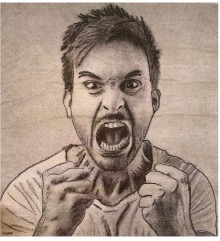
Can you recall a time when you can describe yourself as having “lost it”? What exactly did you lose?  A loss of control, rationality, perspective, self-respect?  

Anger is a natural emotion which should only take a few seconds or minutes to externalise, move through and then let go. It is one of the body’s useful warning systems, useful at the right time, in the right place and in the proper proportions

It is a feeling to be experienced, not judged. It is a form of communication that brings us a message through a felt bodily experience and it is mental. As long as it is not inappropriate, violent or abusive, anger can be helpful and a healthy response

Problems arise when we express our anger inappropriately and disproportionally or swallow it, suppressing and accumulating anger upon old angers. Supressed anger becomes unfinished business riddled with resentments, growing bigger and bigger until it explodes often in the wrong place. This unhealthy reaction is a signal that something is out of line with our core beliefs. The overwhelming intensity of our angry energy is released verbally, physically or both like a volcano. Disproportionate anger is fearful and threatening and we are often so afraid of our own anger and deny it so deeply that we are no longer aware of it. Besides becoming angry with others, we become angry with ourselves for what we did or didn’t do. We are triggered by the betrayal to self, pleasing others at the expense of our own feelings.

We all have our own unique core rational and irrational beliefs. These are complex and they are given to us or developed through our lived experience. An activating event that triggers an irrational belief will trigger an irrational thought and unhealthy disproportionate anger. This simultaneous sequence of events is an indication that we have “flipped our lid”. 

What happens when we “flip our lid?

The upper, mid rain and brain stem work together to enable us to rationalise, remain calm, connected and regulated.

The upper brain is the logic centre, the thinking brain that works in harmony for socialising and reasoning. It hugs our mid brain, making it feel safe making us feel calm and grounded.

The mid brain is our emotional or feeling brain.

The brain stem is primal, instinctive and reactive.  Our fear responses of fight, flight, freeze and flop are here.

When the upper brain is overwhelmed, it disconnects by “flipping our lid”. We lose the ability to process language and to reason. Our unregulated mid brain releases unregulated anger and we instinctively go into our fear responses of fight or flight. This is our most vulnerable time as we are consumed by the intensity and disproportionality of our rage/anger resulting in abusive and violent anger. Our flipped lid prevents us from reasoning or from controlling the disproportionate anger or release of suppressed anger. As our levels of adrenaline and cortisol naturally decrease, our upper brain reconnects and once again we are able to reason. Often we feel ashamed, guilty, regretful or remorseful. We may cry, apologise and even beg for forgiveness, but we are left with the deeply impacting experience of our erupting volcano.

Counselling is a confidential setting to work with a professional to explore the triggers, beliefs, negative thoughts that lead to anger and adverse negative behaviour. It is a safe place to explore and process suppressed anger and to explore and change irrational beliefs into rational beliefs. Counselling supports positive change, self empowerment and acceptance of self.

Kerrie Hipgrave

Psychotherapist, Behaviouralist and Breathwork Coach


Mental Health – Unforgiveness

safe-talk-childrens-counselling-isolation-picture

I wonder how many of us made New Year resolutions and how many of those, if any, related to forgiveness. 

Unforgiveness is not about someone else, it is about YOU and what has been revealed to you about you and it does not protect you from being hurt again.

Fairness forms part of our core belief system, that people and life should be fair and that the world should be as we want it to be….but unfortunately it isn’t! Having the expectation and waiting for an apology from the person who wronged you keeps you stuck in the story of the past.

Unforgiveness occupies a huge amount of space in our minds rent free. Letting go of our narrative of betrayal brings a sense of peace. Unforgiveness keeps us caught in the anger and negativity of revenge and revengeful behaviours such as gossiping, sulking, anger, infidelity, envy and spitefulness to name only a few. Are we more revengeful than we realise and less willing to admit to ourselves?  Holding onto revenge provides an identity, a sense of belonging to a group or society with the same revengeful perspectives justifying our behaviour. 

Our need “to be right” is a human addiction that we can feel a need to prove. “If I am right then I am good enough, I don’t make mistakes, I am worthy and if another has wronged me, then I am right” and this justification evokes a sense of relief and feeds our fear of being wronged, blocking the ability to forgive. 

Ask yourself the question “Who am I angry with?” The person in your head does not exist, your memory is a moment in time, a story of the past.  To let go of that narrative is challenging for our ego as inner peace has no ego.

Forgiveness is the ability to let go of the past, giving us freedom. It takes a huge amount of energy to hold onto injustice and unforgiveness. Change starts through our awareness and being prepared to challenge our negative thoughts that have become our familiar companion.  By changing the story of the past, we can change the impact of the past.

Recognising how blocked we are at forgiving is the first step. The “wrong doing” is a past frozen moment in our minds that is trapping us. Forgiving is not condoning the wrong, it is giving yourself the gift of freedom to let go and move on. People change and “fresh eyes” and forgiving frees us and brings inner peace.

Kerrie Hipgrave

Psychotherapist, Behaviouralist and Breathwork Coach

Mental Health – What Is Anxiety?

Anxiety was the top key word searched by 76,552 people seeking counselling in October on one of the UK’s leading professional counselling directory websites.  So what is anxiety and why does it negatively impact so many of us?

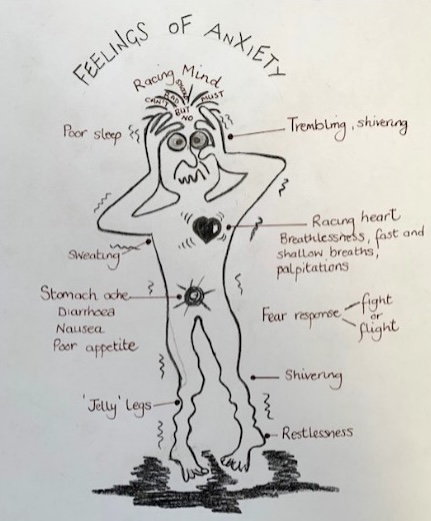
Our daily goal is to survive, to live another day and anxiety plays a vital part in ensuring our survival. Anxiety is often given a negative connotation as something to be feared and out of our control. It is in fact an important emotion that plays a vital role in preserving life and keeping us safe.  The physical symptoms of anxiety are a warning of potential threat that have been detected either consciously or unconsciously by our brain and internal radar.  Anxiety is a warning sign that our body has transitioned into the fear response preparing us for fight (physically or verbally) or flight (walk/run away).

Throughout the day we transition in and out of varying degrees of anxiety that gives us heightened awareness and vigilance. This has a positive impact by improving our performance, feeling more energised and able to cope.  We are then able to transition back into a state of calmness and safety, rest and digest.

Anxiety is problematic when we are ‘stuck’ in the fear response.  The ability to transition in and out of anxiety is lost and our body communicates this through the discomfort of anxiety’s physical symptoms. We become aware of the physical discomfort and awfulising thoughts that impact our quality of life on a daily basis.  We can feel ‘stuck’ and overwhelmed in the fear response and experience a state of permanent hyper-vigilance and physical discomfort that can lead to insomnia.  In this state of hyper-arousal we are alert, constantly checking for danger in everything we do and everywhere we go.  Anxiety becomes a constant unwanted companion, an intruder that constantly sabotages our feeling of safety and contentment.

People seek different ways of coping with the symptoms of anxiety, however the root cause of the anxiety often remains hidden and unaddressed.  Meditation, breathwork and physical exercise has a positive impact on anxiety and helps to reduce symptoms.

When we feel safe and experience inner peace and contentment we thrive and our breath reflects this psyche through optimal, relaxed breath.  Threat is detected by one or more of our five senses: sight, sound, touch, smell and taste or through a fearful thought.  Immediately the breath changes into anxious breathing that can lead to a panic attack and this change is detected by our brain triggering the fear response to support our survival.

Breathwork is a powerful tool and it is the only way we have of overriding the Autonomic Nervous System.  By taking control of breath, we can transition out of the fear response into the safety of rest and digest.  Additionally, psychotherapy/counselling provides a safe, confidential space to work with a professional to explore and discover the underlying core cause of heightened anxiety and hypervigilance.  Personal growth and self-development supports a positive shift into social engagement and a feeling of safety enabling us to thrive, live in the present and feel inner peace and a sense of contentment.

Kerrie Hipgrave

Psychotherapist, Behaviouralist and Breathwork Coach


Mental Health – A Guide To Finding a Private Psychotherapist/Counsellor

Many people do not realise that counselling is not a Government regulated profession and for that reason I have decided this month to write a guide to finding a private Psychotherapist/Counsellor.

The first consideration is whether you prefer working with a man or a woman and if you want online or in-person therapy. The next step is to choose the type of therapy.  In my experience people often enquire about Cognitive Behavioural Therapy (CBT) as it is a clinical model that is offered by GPs on the NHS.   

There are three main types of therapy:

  1. Person Centred (Humanistic) – a non-directive, client led talking therapy embracing the whole person that explores thoughts and emotions with a view to working towards growth and self-acceptance
  2. Psychodynamic – a talking therapy focusing on the psychological roots of a person’s emotional suffering and behaviours by revisiting the past and having conscious awareness of its influence on present behaviours.
  3. CBT – A clinic model that focuses on triggers, beliefs and thoughts resulting in negative emotions and behaviours. Using tools, strategies and a change of perspective leads to positive emotions and behaviour.

Integrative Therapy  – a talking therapy that combines different therapies to specifically target and support each individual client’s needs. Each therapist will offer different approaches depending on their training.

Professional Registration – It is always advisable to seek a professional who is registered with a UK professional body eg BACP, NCS and UKCP.

Professional Directories – To help find the right therapist, there are professional directories detailing therapists’ profiles, experience, qualifications and therapeutic approaches. Therapists work online, phone, text, home visiting, face to face and walk and talk.  Many therapists offer complimentary therapies and creative support to enhance talking therapy.

  • BACP Find a Therapist
  • Counselling Directory
  • Psychology Today
  • Sunflower Network Directory (children and adolescents)

The key to successful therapy is a client’s commitment to change and the therapeutic relationship.  Finding the right therapist for you is vitally important and so it is advisable to have a brief phone call or video call to see whether there is a connection.   Therapy is usually a weekly commitment on the same day and at the same time, although this can differ with some professionals offering a more flexible approach and bi-weekly sessions. 

Working with children differs from working with adults.  It is a specific qualification and Counsellors work creatively through art, play and talking therapy.  An enhanced DBS and be safeguarding training is required to work with children and adolescents.

Kerrie Hipgrave, Psychotherapist


Mental Health – Shame

  “Shamed People Shame People” A University lecturer once boldly announced that “we all have shame at our core”. …

Mental Health – Emotions and the Breath

Breath is life! We enter the world on the out breath and depart on the in breath. How we breathe influences our health, our …

Mental Health – Unhealthy Anger

Can you recall a time when you can describe yourself as having “lost it”? What exactly did you lose?  A loss of …