
Mental Health – What Is Anxiety?
Anxiety was the top key word searched by 76,552 people seeking counselling in October on one of the UK’s leading professional counselling directory websites. So what is anxiety and why does it negatively impact so many of us?
Our daily goal is to survive, to live another day and anxiety plays a vital part in ensuring our survival. Anxiety is often given a negative connotation as something to be feared and out of our control. It is in fact an important emotion that plays a vital role in preserving life and keeping us safe. The physical symptoms of anxiety are a warning of potential threat that have been detected either consciously or unconsciously by our brain and internal radar. Anxiety is a warning sign that our body has transitioned into the fear response preparing us for fight (physically or verbally) or flight (walk/run away).
Throughout the day we transition in and out of varying degrees of anxiety that gives us heightened awareness and vigilance. This has a positive impact by improving our performance, feeling more energised and able to cope. We are then able to transition back into a state of calmness and safety, rest and digest.
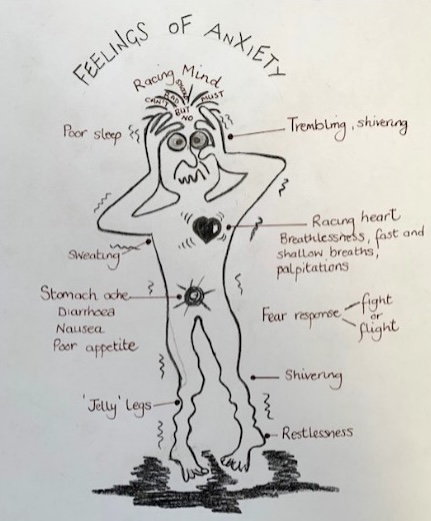
Anxiety is problematic when we are ‘stuck’ in the fear response. The ability to transition in and out of anxiety is lost and our body communicates this through the discomfort of anxiety’s physical symptoms. We become aware of the physical discomfort and awfulising thoughts that impact our quality of life on a daily basis. We can feel ‘stuck’ and overwhelmed in the fear response and experience a state of permanent hyper-vigilance and physical discomfort that can lead to insomnia. In this state of hyper-arousal we are alert, constantly checking for danger in everything we do and everywhere we go. Anxiety becomes a constant unwanted companion, an intruder that constantly sabotages our feeling of safety and contentment.
People seek different ways of coping with the symptoms of anxiety, however the root cause of the anxiety often remains hidden and unaddressed. Meditation, breathwork and physical exercise has a positive impact on anxiety and helps to reduce symptoms.
When we feel safe and experience inner peace and contentment we thrive and our breath reflects this psyche through optimal, relaxed breath. Threat is detected by one or more of our five senses: sight, sound, touch, smell and taste or through a fearful thought. Immediately the breath changes into anxious breathing that can lead to a panic attack and this change is detected by our brain triggering the fear response to support our survival.
Breathwork is a powerful tool and it is the only way we have of overriding the Autonomic Nervous System. By taking control of breath, we can transition out of the fear response into the safety of rest and digest. Additionally, psychotherapy/counselling provides a safe, confidential space to work with a professional to explore and discover the underlying core cause of heightened anxiety and hypervigilance. Personal growth and self-development supports a positive shift into social engagement and a feeling of safety enabling us to thrive, live in the present and feel inner peace and a sense of contentment.
Kerrie Hipgrave
Psychotherapist, Behaviouralist and Breathwork Coach
